Followup to ‘this ebook is a lemon’

There have been a few responses to my ‘This ebook is a lemon’ post earlier. Most of them either omit or misunderstand details from the post, which means that I probably wasn’t clear enough in the original. So here is a followup with a few clarifications based on issues raised.

It’s not an analogy

I was not comparing ebooks to cars. I was, like Akerlof in his paper, using cars to explain the ‘market of lemons’ dynamic. The other examples Akerlof used in his paper were from insurance and employment but the used car example was both simpler to explain and had the added benefit of being real-world evidence of the model.

Why didn’t I use ebooks to explain the theory? Because, as I stated in the post, I’m not 100% certain ebooks fit the model. It’s better to explain a model using examples that fit perfectly and then let people apply that understanding to the problem area at hand.

Well, except for the fact than none of the commenters or responders seem to have done that.

No, not all cars or ebooks suck, that’s not the point

Another common misunderstanding was that I was claiming that all ebooks were crap or that all cars from a certain era were crap. Absolutely not. The entire post and Akerlof’s model hinge on information asymmetry. The buyer can’t tell beforehand whether any given product is a lemon or not while the dealer can. Amazon, for example, has access to abandonment rates and return rates, as well as the ability to data-mine notes on a book for negative keywords. A publisher knows quite well how much effort they have put into a book. Dunning-Kruger aside, most publishers who are dumping crap on the market know it’s crap.

This information asymmetry is what gives rise to the bad publisher’s incentive, the customers demand for a lower price, and the good publisher’s disincentive. The bad publishers don’t take over the market until late in the process and I stated quite clearly in the post that I think we’re at the start of the process, not the end.

So, the point isn’t that all cars or books are bad. The point is that the buyers know that there are lemons in the market (might even have bought one or two in the past) but can’t tell if any of their current options are lemons or not. The existence of lemons combined with information asymmetry is what creates the dynamic.

“The returns policy you suggest is insane”

Possibly. There are only two ways to break the market of lemons dynamic:

  1. Information symmetry. The customer gets access to all of the information needed to help tell lemons from the rest.
  2. Returns and warranties. Which is an artificial way of shifting risk back onto the provider.

So, you need either a massive returns policy or information symmetry. I don’t think you’d need both.

And as to whether publishers could survive that sort of returns policy for ebooks. Of course they can, they live with that same policy for print.

You don’t have to work in publishing for long to see at least one sales forecast completely destroyed by a series of booksellers returning a book months later. Publishers are already geared for this kind of uncertainty.

“This will only impact self-publishers and push readers to big publishers”

Possibly. But what worries me is big publishing seems to be relaxing their quality standards (or they never had them, as in the case of ebook production). More and more they are acquiring new titles from self-publishing or fan-fiction, which would be fine if they were going for the good titles (of which there are plenty in both circles) but they are manifestly going for the crap most of the time.

But, yes, this could result in a two tier market where big publishers get away with charging $10 and everybody else can’t give it away.

“You didn’t mention X free bla”

I stated a general principle of the effects of free. If somebody disagrees with a common sense statement, bringing in examples won’t sway them, they will just come up with excuses for disregarding those examples.

“Piracy solves the problem”

One of the most interesting observations on piracy was Tim O’Reilly’s statement that ‘piracy is progressive taxation’. That is, it disproportionately impacts the more successful.

A corollary to that is that the promotional and marketing benefits of piracy disproportionately go to the more successful. Try to pirate anything beyond the recent and mainstream and you will run into difficulties. Most people know how to pirate a current TV series. They don’t have a clue of how to find anything less popular.

Moreover, piracy is a function of interest. You won’t pirate something you aren’t interested in. So, any product that has generated enough interest to benefit from the distribution effects of piracy has also generated enough interest to break out of the ‘market of lemons’ dynamic.

"DRM-free solves the problem

It’s a start since it does take away some of the long term risk for the buyer (‘will I lose this book in the future due to DRM?’) but it doesn’t address the basic information asymmetry.

“Prime members read for free”

Only for Prime members in the United States and the Lending Library only has a fraction of the books on the market.

The Lending Library may well be part of the solution as it lets people read as much of the ebooks as they want, but it comes with it’s own issues. Namely, most publishers can only get into it by giving Amazon exclusivity, which would make the Lending Library a massively iatrogenic solution. The cure would be worse than the sickness.

“The bad publishers will drop out”

Given that bad publishers have more incentives to publish than the good and that bad publishing requires next to no investment, this problem will not be solved by bad publishers dropping out of the market as their ‘get rich quick’ schemes fail. The incentives will make sure that several new bad publishers will be lining up to replace every one that drops out.

“You can easily tell whether a car is a lemon or not”

The idea here being that the car simply either works or not—it’s quality apparent just with a test drive.

A lemon is not a car that doesn’t work or handles badly. A lemon is a car or product that fails later on, after purchase. A car with a history of specific kinds of repairs and failures is more likely to fail than others (and is a lemon). This is the reason why used car dealers in many countries are required to disclose a car’s repair history. Those laws are in effect because of Akerlof’s paper. They weren’t on the books when he first wrote it.

Akerlof’s theory is not about ‘used’ versus new products

The used car market was just an example. Whether the cars were new or used doesn’t matter for the theory. The dynamic is orthogonal to the newness or how used the products are. That’s why his other example was a non-rival product like insurance.

“One man’s lemon is another’s lemonade”

Sure, that’s why I said that the following was one of the basic premises of the post:

Quality in this piece being defined as whatever the reader values, no matter how rubbish it looks to an over-educated twit like me. I’m not making any assumptions about writing, genre, or style.

That means that when I’m talking about quality I’m talking about it from the perspective of the buyer, e.g. a romance reader looking for romance ebooks. A lemon in this context is what that reader considers to be an unacceptably bad romance book, not a scifi or crime novel.

And I also stated that if you disagree with any of the premises then you really don’t have to read the rest as you’ll almost certainly disagree with it. I meant it. If you already disagree with the premise why bother responding to the post? I’ve already given you an out.
This ebook is a lemon

It’s no secret that I’m a huge fan of both Akerlof and Romer, not just the paper they co-wrote on looting in the financial system but also their work individually. Turns out one of Akerlof’s most famous papers is directly relevant to the ebook market.

For starters, a few basic premises. If you disagree with any one of these you can feel free to ignore the entire argument. I can easily pick apart any one of these statements myself, so I’d understand it very well if you disagreed with them. However, if you find them somewhat likely then the overall picture of the ebook market is a bit dark.

  • Ebook buyers buy more than they read. Book abandonment is high and out of proportion with the return rate.
  • Sampling the first few chapters is a lousy predictor of how much the reader will enjoy the book. You can only assess basic stylistic issues from a sample, not storytelling quality. Ergo the reader has to buy the ebook to assess the quality of the story.
  • Reviews are an extremely unreliable indicator of quality. The average quality of most reviews themselves is very low. Many reviewers are paid shills or just extremely overworked.
  • Luck is one of the biggest determinants of bestseller status.
  • Striking, marketable, differentiation is difficult in ebooks without having the reader actually read the book.
  • The marketing differentiation that is possible without having the reader actually read the ebook (sex, scandal, celebrity) is at best orthogonal to the book’s actual quality and at worst inversely correlated to quality.
  • Quality in this piece being defined as whatever the reader values, no matter how rubbish it looks to an over-educated twit like me. I’m not making any assumptions about writing, genre, or style.
  • The majority of ereader vendors implement style and design overrides to preserve a baseline of readability and usability, not to commodify their product’s complements. (I.e. they are well-meaning, rational actors.)
  • Distribution is becoming mostly self-serve with a very porous filter. (Like, for example, the self-publishing services run by Amazon, Kobo, B&N, and Apple.) Almost anybody with a computer has access to the publishing industry’s full ebook distribution chain.
  • Ebook development is underpaid and so will not attract experienced talent from the web industry.
  • It’s easier to make a bad book than a good one and so the vast majority of ebook supply will be bad.

The argument I’m about to make is that this situation gives publishers (both self- and non-self) an incentive to market poor quality books (remember the definition of quality I outlined above), that the average available quality of books will fall, and that the overall publishing market will shrink in terms of overall revenue (even though the the number of units sold increases).

First, the basics…

A market of lemons

It has been seen that the good cars may be driven out of the market by the lemons. But in a more continuous case with different grades of goods, even worse pathologies can exist. For it is quite possible to have the bad driving out the not-so-bad driving out the medium driving out the not-so-good driving out the good in such a sequence of events that no market exists at all. (Akerlof, 1970)

In 1970 Akerlof published a paper describing exactly why a new car loses a lot of its value as soon as you drive it newly bought out of the showroom.

With new cars you can assume that most cars of the same make will be of a similar quality and that if something goes wrong you are probably covered by a warranty.

Anybody who is in the market for a car doesn’t have access to the information that would let them tell the difference between a good car and a bad car (otherwise known as a ‘lemon’, hence the title of the paper).

If a new car is a lemon, i.e. has some sort of manufacturing flaw, neither the buyer or the seller are aware of the flaw and the manufacturer usually covers the repairs if the flaw is discovered within the warranty period.

However, because used cars have a history, the seller of a used car is likely to know which are lemons and which aren’t. This asymmetry of information in the used car market is, according to Akerlof, the primary reason why there is a pricing disparity between a new car and even the most recent of a used car.

Both bad and good used cars are likely to sell for the same price because the buyer can’t tell the difference between those that are lemons and those that are not. And because the buyer knows this there will be s strict upper limit to what they will pay for a used car—the seller of a good used car will not get its full value.

The sellers of good cars have an incentive not to sell while the less well-meaning sellers of lemons have an incentive to sell. The information asymmetry means that less scrupulous will, at least while the market is still maturing, get more than their ‘lemon’ car is worth.

The Lemons model can be used to make some comments on the costs of dishonesty. Consider a market in which goods are sold honestly or dishonestly; quality may be represented, or it may be misrepresented. The purchaser’s problem, of course, is to identify quality. The presence of people in the market who are willing to offer inferior goods tends to drive the market out of existence- as in the case of our automobile “lemons.” It is this possibility that represents the major costs of dishonesty – for dishonest dealings tend to drive honest dealings out of the market. There may be potential buyers of good quality products and there may be potential sellers of such products in the appropriate price range; however, the presence of people who wish to pawn bad wares as good wares tends to drive out the legitimate business. The cost of dishonesty, therefore, lies not only in the amount by which the purchaser is cheated; the cost also must include the loss incurred from driving legitimate business out of existence. (Akerlof, 1970)

What worries me…

Reliable information about ebook quality is increasingly hard to find in the market. Reviews have almost completely been gamed; a casual reader has few reliable indicators that tell them whether a review is an honest one or not. Rubbish books, ones that most buyers don’t even read to the end before giving up, shoot up the bestseller lists due to viral marketing. Bestseller lists themselves are increasingly either gamed by publishers or by ebook retailers themselves who are trying to shift their sales in one direction or another.

Even some big publishers are getting into the game by dumping cheap OCR converted ebooks full of errors onto the market. Again, a casual reader has no way to know whether this particular big publisher is one that does a quality ebook version or one who pumps out ebook ‘lemons’ by the virtual truckload.

The same applies to self-publishing. The casual reader doesn’t have access to the information to help them tell the difference between the self-publisher who has invested substantially in the quality of their book and one who is dumping something onto the market looking for a quick profit that requires next to no cash outlay. That is without mentioning the publishers and authors who have been paying for reviews, engaging in sock-puppetry, and astroturfing left, right, and centre.

My worry is that the ebook market has all of the hallmarks of an early stage ‘market of lemons’. The information asymmetry—exacerbated by the information hoarding done by the big ebook retail players—the growth in dishonest actors, and the increasing disincentive for honest actors to even participate at all, make ebooks an ideal candidate for the lemon dynamic.

What this would mean, if true, is that publishers and self-publishers will begin to experience massive pressure to lower prices if they are to move their product at all.

I think this is already happening with self-publishers.

Alternatively, revenue might become a function of your reputation and your maximum addressable market. That is, once you’ve surpassed whatever necessary lower reputation bound that is required by your addressable market, the price becomes elastic within the bounds set by the market (e.g. there are only so many steampunk fans in the universe).

Below that reputation bound you will have problems even giving away your product.

If the former model is correct (i.e. the ‘we’re all screwed’ model) then the ebook market can only be saved by the ebook retailers. They’d have to begin to practice complete information transparency and put in place aggressive returns policies (yes, even more aggressive than the one Amazon currently practices). Sales information, return rate, who exactly is that reviewer and where did they come from—anything and everything about the book would have to be shared in a digestible manner. A culture of secrecy at this stage would risk killing the market off entirely.

If the latter model is correct (i.e. you can only charge when you’ve built up a reputation) then we enter a world where the publishing industry needs to learn how to engage directly with readers to build their audience. This means that they would have to give a lot more stuff away for free.


A note on free

Free creates the most value when it is specifically being used to build a community and decrease information asymmetry—transferring the burden of risk from the reader to the publisher. Short term free offers are of little use. You need to go long term and do it with work that is representative of what you do.

Free at the moment is used by exactly the crowd that churns out the most rubbish (Smashwords) and Amazon makes offering titles for free needlessly difficult.

A free offering is always preferable to a cheap offering for the seller because it suspends the buyer’s value judgement temporarily but in exchange buyers can assess the quality of the good at their own leisure. A mixture of free and higher or variable priced goods is likelier to result in a fairer exchange of value between the reader and author than an oversupply of cheap (the free offerings build reputation).


What to do?

If Akerlof’s theory is right and is applicable to the ebook market then it predicts that prices in the market will be driven down below what can sustain the good actors and investment in research and development will cease.

I.e. the books will all be rubbish, look like shit, and the big tech companies will cease to invest in their ebook platforms.

This isn’t a problem that can be solved through code or UI design. It requires a fundamental change in business tactics. You can’t solve structural business problems with code.

The biggest measure retailers could take to ease this asymmetry is an extended, no questions asked, refund policy. If a reader asks for a refund they should get it even if they bought it ages ago. A year should be enough. A market that is developing ‘lemon’ dynamics requires a generous refund policy.

(This is in addition to the radical information transparency I mentioned above.)

This would obviously shift most of the economic power back to the reader but it would also have several consequences. Low quality books would be hammered in the market. Publishers would no longer have incentive to market bad books. Prices would rise to account for the returns and the portion of readers who dishonestly return ebooks but readers would likely accept the rise because of the generous refund policy. The market would contract sharply at first as the bad actors get shaken out but would begin to grow aggressively as the good actors, who are rewarded with both a higher price and a lower return rate, reinvest their profits in product development.

That’s the theory, anyway.

I hope we are in for a world where reputation becomes the key to survival, where publishers and authors with a good reputation in a market segment can make a decent profit, because the alternative is horrifying. I don’t think it is likely that ebook retailers will take the measures necessary to correct the dynamic once it becomes more apparent that the ebook market is a market of lemons.


ETA:

One thing worth mentioning:

If you assume that the above applies to the iOS app store as well then that would mean that the best pricing strategy for a new app is freemium. That is, the app itself should be free to use/play with variably priced add-ons and features you can buy once you know you like the app.


ETA 2:

I’ve posted a followup to this post addressing some of people’s criticisms and misconceptions.


References:

Caught between madmen and mercenaries

This is not a comment on the recent court ruling on Apple, agency contracts, and price fixing.

But a cursory glance at the history of ebook retail makes one conclusion crystal clear:

Ebook retail is a horrible horrible business to be in.

On one side you have self-destructive madmen like the big publishers who have done the following lovely things to their ebook retail partners:

  • Abruptly changing all ebook distribution contracts to agency. Which would be fine if delays on their part hadn’t meant that smaller ebook retailers in many cases spent months without any inventory from the big publishers.
  • Complete refusal to even consider tactics that would level the playing field for the retailer, such as going DRM-free or adopting a wholesaling strategy that would let ebook retailers implement in-app purchases on iOS devices.
  • Near nonexistent quality control of ebook formatting, shipping titles with errors ranging from extensive spelling errors not in any other format, to garish formatting errors, even to the point of text being missing from the ebook edition.
  • Next to zero participation in developing ebook format and ebook-related standards, mostly letting tech-oriented companies run rampant with no consideration to production or distribution costs.

This is without even considering the things publishers could be doing to specifically help ebook sales such as creating ebook-optimised covers.

On the other side you have the cutthroat mercenaries. Amazon seems willing to run its entire Kindle business at break-even, which would be fine if it didn’t also make massive development investments in hardware and software. Investments that it seems content with never recouping. Apple seems willing to butcher lucrative product categories because of its inability to let any buck pass by an iOS device without demanding a thirty cent cut.

Anybody planning to start a new ebook retail store would be stabbed in the back by publishers or cut to ribbons by ruthless competitors before the first year is out.

Your suppliers have no concern for the viability of your business and are quite willing to ruin it for little to no personal gain. Your competitors have corporate parents who are willing to run the ebook retail unit either at a loss or break-even (and that’s without taking their substantial R&D investments into account, most of which are focused on developing or protecting vertically integrated silos, not innovations that actually benefit the customer).

In short, it’s a sector that desperately needs new, competent, and innovative entrants but is too irrational to sustain any sane business development or investment.

Major update to Studio Tendra’s Oz project

The Oz Reading Club has been updated with books seven and eight. And since I forgot to blog about books five and six, that means we’ve de facto got a massive four book update on our hands.

And we’ve reached a major milestone.

Yup. We’re more than halfway through L. Frank Baum’s Oz series.

What do you think about the covers Jenný has illustrated so far?

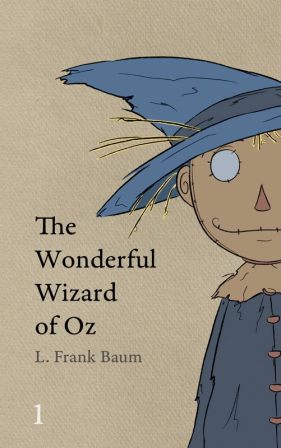
The Scarecrow

1. The Wonderful Wizard of Oz

The Scarecrow and Tin Woodsman

2. The Marvelous Land of Oz

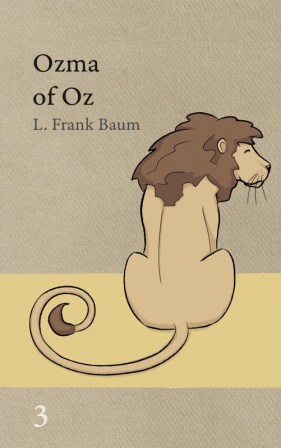
Cowardly Lion

3. Ozma of Oz

Hungry Tiger

4. Dorothy and the Wizard of Oz

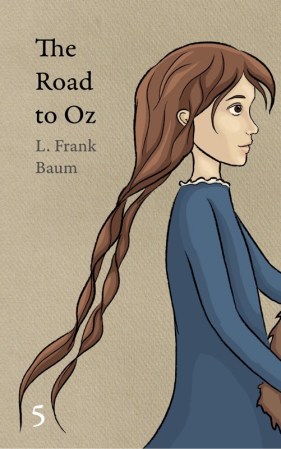
Dorothy

5. The Road to Oz

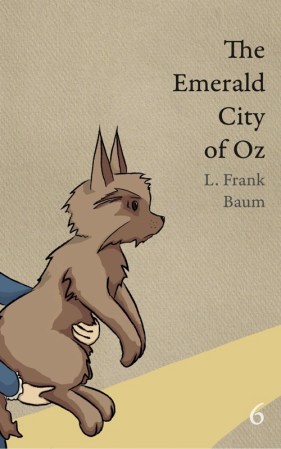
Toto the dog

6. The Emerald City of Oz

The Shaggy Man

7. The Patchwork Girl of Oz

Polychrome

8. Tik-Tok of Oz

Knights and Necromancers: new books and megapacks!

Knights and Necromancers three and four are ready to be released but you can get them a bit earlier than the rest.

The third and fourth book in the series have both been submitted to Kobo, Apple, and Amazon for their pre-publication vetting process (which, frankly, can take days).

But you can get them sooner, if you really really want. 🙂

Continue reading

High tide and a room of your own

Under the glacier

The germ of the idea behind ‘Loot, kill, obey’ comes from two sources, one literary, one from real life.

The literary germ is going to be obvious to you once I mention it: Daphne du Maurier’s Jamaica Inn. Specifically the scene with the wreckers towards the end.

Of course that led to a bunch of research that revealed how the whole scenario doesn’t really work, you’re more likely to wreck a ship by turning off a real lighthouse than by erecting a fake one. Which is then what I had the wreckers do in my story.

The second inspiration is a little bit more personal: my great-grandmother’s farm in Staðasveit.


My great-grandmother, María Ásmundsdóttir, was a remarkable woman. She was one of Iceland’s earliest photographers. When she was born, Iceland was a pre-industrial agricultural economy. When she died, it was an advanced western economy with high living standards, free healthcare and free education.

When María was born, a child had only a 50/50 chance of reaching the age of five (which is why life expectancy numbers are so misleading, but that’s a topic for another day). She survived tuberculosis, two wars, saw Iceland declare independence, and got to experience radio, photography, movies, cars, TV, computers, airplanes when they were new and shiny inventions nobody had quite figured out yet.

She also made a decision early in her life which meant that her descendants are cut out of the farm on Snæfellsnes.

Well, maybe cut out is too harsh a word. Her siblings’ descendants own the farm. Her own descendants don’t.

For good reason, as well.


My great-grandmother’s farm

The farm is a beautiful thing to behold. It isn’t a grand thing like you’d expect an old well-to-do farm in Europe to look like. Iceland doesn’t have cottages or estates. A nice two story building covered with corrugated iron is pretty much as grand old style as Iceland gets.

The current farmhouse was built when my great-grandmother an adult. The farmhouse she had grown up in was a traditional Icelandic turf house.

Yeah, like I said. Iceland was a pre-industrial farming economy until the 1940s.

I’ve never seen the original burstabær, it was in ruins by the time I managed to visit the place, but María lived there with her two daughters for the first few years of their life. My grandmother, Áslaug, on a good day, could recall stories and details about the old farmhouse, about a way of life that hadn’t changed much Iceland for almost two hundred years.


My great-grandmother was a single mother in the early twentieth century.

Now, anybody who is familiar with Icelandic culture knows that most Icelanders are proud to live in a country where a single mother can raise her kids without sinking into poverty, anything else is a failure of society. There’s no judgement or condemnation. You cope. Relatives help. Whatever flaws Iceland has (and there are plenty) intolerance towards single mothers isn’t one of them.

This wasn’t the case when my great-grandmother was raising her two daughters.

Iceland used to be a strict Lutheran society. Thinking bad thoughts was a sin. Everybody was a sinner. Strictness and intolerance was the norm. More things were banned than not. Iceland was one of the earliest alcohol prohibition nations and one of the latest to lift it. In one word: puritanical.

Of course, María didn’t help matters by having two children with two different men and never showing any interest in marrying them or regret about them not marrying her.


Snæfellsjökull

The farm is in an unusual location. The only way to reach it is to walk, during low tide, along the beach, with the roaring ocean on the left and sheer cliffs on the right. It’s a bit of a trek to reach the actual farmhouse from the nearest road and you have to time it so that you get to the farm before the tide comes in. Otherwise you’d be washed out into the sea.

Of course, nowadays you can also use an SUV or a proper off-road vehicle to reach the farm, but back in my great-grand-mother’s day they didn’t have that luxury.

Most Icelandic beaches are black; the sand is made out of volcanic rock ground down by the elements.

Unusually for Iceland, the beach leading to the farm is white, like one of those white sand beaches you see in the Mediterranean.

It wouldn’t look odd to a foreigner, but to me, an Icelandic college student, this was one of the few times in my life that I had actually seen a white beach and seeing one in Iceland was an alien, somewhat weird, feeling.

Seeing the famous Snæfellsjökull just ahead, hovering almost mystically over the countryside, only made the experience weirder.


Snæfellsjökull is Iceland’s most famous mountain, volcano, and glacier. Or it used to be before Eyjafjallajökull erupted. It was the opening to the underworld in Jules Verne’s A Journey to the Centre of the Earth. In Icelandic folklore it is Iceland’s point of greatest magical power, affecting all those who live around it in weird ways. Those born “undir jökli” (by the glacier) are said to be different from the rest of us.

Others say that it’s like a magnet for Iceland’s hidden people.

One group of cranks has congregated there on a regular basis because they believe it will be the landing site for a visiting species of benevolent aliens.


Dividing an estate caused friction. It always does. There’s something about inheritances that drives siblings to argue about things that ultimately don’t matter.

When her parents died, my great-grandmother was the cause of a schism in her family. She argued with her siblings about what should be done about the farm.

They wanted to continue to run and keep the farm. She didn’t.

Her logic was impeccable. If they kept the farm, she’d be doomed to live and work there, raising her daughters there, for the rest of her life. If they sold the farm, she could buy a flat in the capital—have a room of her own, so to speak.

In the end, she forced a sale, took the money, and moved to Reykjavík with her daughters, buying a tiny flat by Hringbraut in Reykjavík’s Vesturbær. Many years later, the descendants of her siblings bought the farm back, sans most of the land, which now belonged to a neighbouring farmer, and have been using it as a summer house since. They let the rest of us visit the place occasionally, if we ask really nicely.

María Ásmundsdóttir lived in that flat for most of the rest of her life, only moving into a home during the absolute last years of her life.

That small flat at one point housed six people when my grandmother moved back in with her mother with her four children after she left her husband. The flat was a life saver.

My great-grandmother spent the rest of her life sewing, painting, and photographing. She held her first gallery show of her paintings when she was eighty. Her daughters only found that she had suffered from glaucoma when she told them about the operation that fixed it, after the fact. She, a half-blind octogenarian, had managed to conceal her half-blindness, organise the operation and doctor’s appointments, and make her way to the operation all without any help from anybody.

Then she went back to painting, sewing, and taking photographs.

She was an awesome woman whose frequent criticisms of people were both brutal and especially stinging because she invariably had a solid point. There were times when she was absolutely terrifying. I miss having her around as she was one of the few people who had a tendency to be even blunter than I am.


From the last leg of the trek to the farm

The small town of Galti in “Knights and Necromancers 2: Loot, kill, obey” is inspired by my great-grandmother’s farm. The beach-side walk that is only passable during low tide, the horizon lined with mountains, the small dock and simple buildings are all drawn from my memories of that place.

And, although none of them are based on, María, my great-grandmother, the memory of her and the other awe-inspiring women in my family are the motivation for the creation of the female characters in all of my stories.

In Loot, Kill, Obey, four of the five main characters are women, as are two main ‘bad guys’. The sorcerer Cadence, a character in Knights and Necromancers 1 (and in stories five and six), was created because I wanted a character who was, frankly, as intimidating as some of these women were in real life.

You don’t see truly intimidating women that often in fiction even though they are all over the place in real life.

I hope I can change that a little bit.


You can buy “Knights and Necromancers 2: Loot, kill, obey” on Amazon.com, Amazon.co.uk, on the iBookstore, and from Kobo.

Or, possibly for a limited time, you can read it for free online.

Two questions on putting books on the web

I’ve put together a web version of Knights and Necromancers 1: Days of wild obedience.

You can have a look at it here. Read the entire thing online.

I decided to keep it simple, no javascript, just focus on making readable, linkable web pages.

So, I have two questions for you:

  1. What do you think about the design?
  2. What do you think about offering full versions of ebooks for free on the web while charging for the EPUB/Kindle versions?

I’m debating whether to put full versions of later entries in the series on the website (using the above-linked design) while still charging for the ebook versions of the stories on Amazon, iBookstores, and Kobo. I know of a few examples where that has worked and a few where it hasn’t, so I’m curious what people think.

The Readmill comment fiction challenge

From the challenge page:

Over the next twenty six days I am going to add a flash fiction piece to every chapter of Knights and Necromancers 1 as a comment in Readmill. These comment fictions will be 300 to 1000 words long standalone scenes that add some context and background to the the story.

Go read more about it on the comment fiction challenge page itself.

Each comment fiction will start with a § to signify that it is a piece of fiction and not a regular comment or annotation.

You can read the first two here and here.


The genesis of this challenge is in the suggestions people sent me a week ago when I asked for ideas on how to market the Knights and Necromancers series. The suggestions made by Tom Abba and Pablo Defendini reminded me of a few ideas I had several years ago during my PhD.

(I pitched this idea a few days ago to Tom. He was decidedly unimpressed. :-))

Most of you are probably not aware that I worked on (and finished) a PhD on ebooks, interactivity, and structure from 2002 to 2006. One of the basic ideas in the PhD was to divide ebooks into three types:

  • Plain ebooks that did little beyond preserve formatting and add the basic features you expect from conversion into digital.
  • Rich ebooks that integrate networked information into their margins but are otherwise identical to standard ebooks.
  • Deconstructed ebooks that give up on the pretence of preserving some sort of continuity with their predecessor forms and are fully digital.

Now, if I were writing my PhD now, I’d have used the terms standard, networked, and database ebooks instead, as I think those terms are more descriptive.

The basic idea was that one of the biggest changes that an ebook can have over a print book is that it can dynamically integrate its context over the network. Networked highlights, public comments, dynamic annotations, are all examples of framing structures that do that. (And, yes, I was writing about these things years before Amazon introduced the Kindle with popular highlights and public notes. Don’t dig up the PhD thesis though, it’s awful. I had a few good ideas back then but the overall execution and writing was ghastly.)


The comment fictions I’m going to write over the next twenty-six days provide a new context for Knights and Necromancers 1. They frame each chapter, comment on it, and re-contextualise it, possibly completely changing how the chapter is read. They do this without actually changing the story in any way, acting much in the same way as a frame does on a painting (putting a painting in a gilded frame changes our perception of it completely without changing a single brushstroke).

You should read the Readmill comment fiction challenge page itself to get the book, see the schedule, and following me on Readmill is probably the easiest way to see my annotation in the ebook itself.

And if you let me know on twitter, there’s a good chance I’ll follow you back on Readmill since I’m looking to add people on Readmill. (Not on twitter, though. Looking to cut down on the people I follow on twitter. No offence intended.)

So, I challenge you to keep up with me (two chapters a day) and my challenge will be to keep the pace.

Should be fun 🙂


What about other ereading apps?

I’ll be adding the comment fictions as public notes on the Kindle as well, just a few days later. I’m not too fond of the UI for notes in the various Kindle apps, though. Much prefer Readmill’s.

I’d also be interested in trying out Kobo’s Author Notes but the only info I can get on it is a vague blog post and a link to a blank page.

I can only assume that whatever program Kobo had going has been discontinued. I’d love to find out more about it but I don’t even have the first clue who to email about getting more information.