Books of Christmas Past

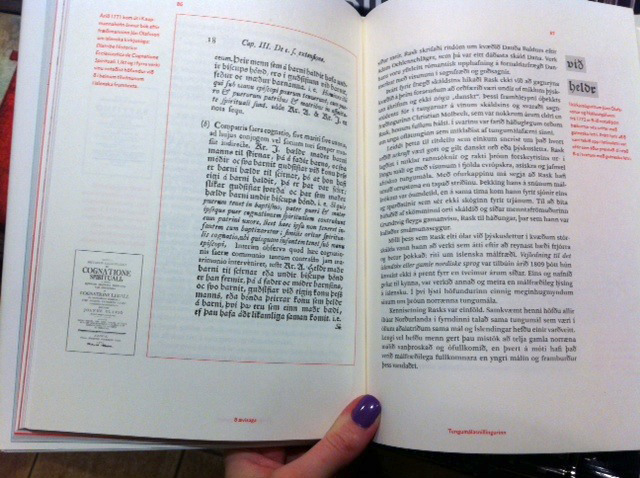
My original intention with this post was to write about beautifully designed books from past years but I admit I lost my way a bit. No matter, it was mostly an excuse to talk about a lovely book published last year called “Íslenskir fuglar” by Benedikt Gröndal.

Benedikt Gröndal was a very talented man. He was a poet, artist and a natural scientist. He was the first director of The Icelandic Natural History Society in 1889 whose main goal was to build a Museum of Natural History in Reykjavík. This guy did a lot more interesting stuff but I honestly can’t be bothered to translate it right now. Maybe some other day.

fuglar

Benedikt Gröndal did some calligraphy too.

Anyway, last year Crymogea published Íslenskir fuglar which he finished in 1900 but it was never published. In this book he documented all birds seen in Iceland before 1900. He drew them, described them and wrote down what was known about each species at the time. This book is amazing. There are two versions of it. The normal one you can buy in book stores and the special edition. The special edition is bound in leather and comes in a wooden box. They only made 100 copies and each copy is numbered. It is, of course, pretty expensive.
benediktgrondal-8

Paper package.

benediktgrondal-4

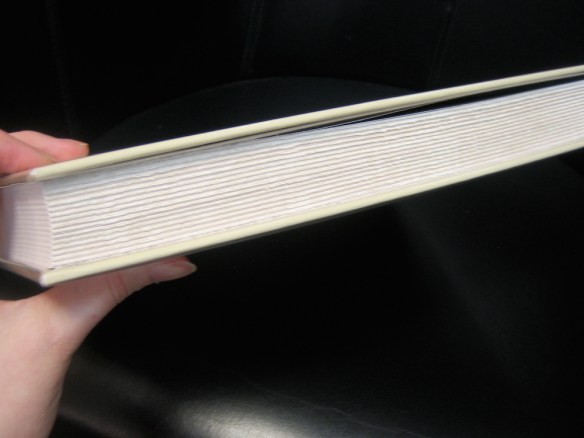
Edges.

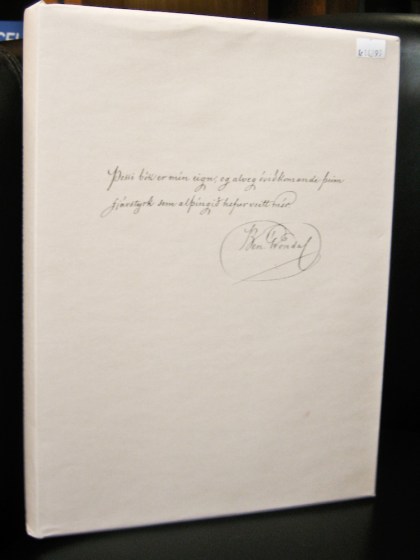
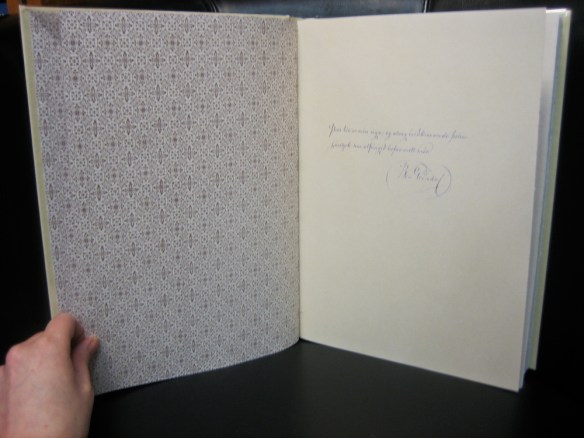
The regular version is awesome too. It comes packed in paper and on the front is written in Benedikt Gröndal’s handwriting: “This book is my property and has nothing to do with the financial aid given to me by the Parliament”. They left in a lot of his own writing and even used his original calligraphed title page. When his own handwriting wasn’t used, they use a typewriter font so it keeps with the old manuscript feel of the whole thing.
benediktgrondal-1

Lovely pattern.

benediktgrondal-3

List of birds.

benediktgrondal-5

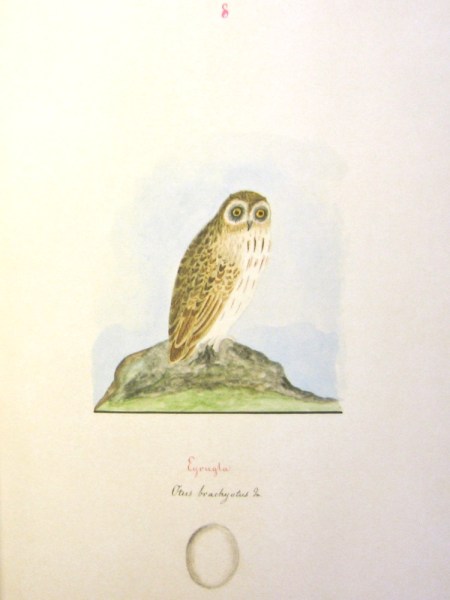
No more caffeine for this owl.

The drawings are brilliant. They’re obviously not quite what they do these days but you can just feel the passion and enthusiasm he had for nature. Benedikt Gröndal was definitely a pioneer in this area in Iceland. For this one guy to sit down and meticulously document not only birds but also plants and mammals at a time when Iceland was…well lets just say things were pretty shitty. Good job Crymogea for publishing this book.

benediktgrondal-7

The Great Auk. Extinct since the mid-19th century.
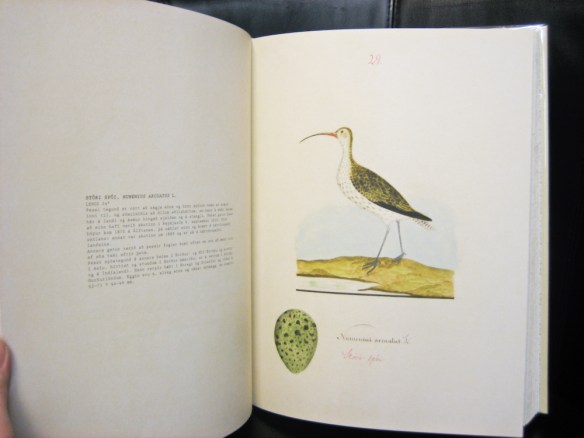
benediktgrondal-6

Eurasian Curlew.

Now when I decided to do this post I was quite optimistic about finding more brilliantly designed books published in Iceland in the past few years but I honestly came up a bit short. I must say the design of Icelandic book covers has improved dramatically in the last couple of years.

While desperately searching through Bókatíðindi I came across a couple of books whose popularity astounded me at the time. One such book is “Sumarlandið – framliðnir lýsa andláti sínu og endurfundum í framlífinu” or “Summerland – the deceased describe their death and reunions in the afterlife”. Yes that is the title and it sold out completely before christmas 2010, was reprinted in February 2011 and sold out again.

When it shot up the bestseller list in 2010 I remember briefly thinking that maybe we are a little bit weird as a nation. But it’s really not that surprising. We do have a reputation of readily believing all sorts of stuff. The book has a good message and was published by Guðmundur Kristinsson, a writer in his eighties who has quite a bit of experience in writing about these things. According to Bókatíðindi, it was published due to encouragement from beyond and when the dead encourage something I really do think it’s best to comply. And it all worked out. I’ll bet the big publishers were a bit annoyed at this surprise bestseller.

Another book that took me completely by surprise was “Og svo kom Ferguson…” or “And then came Ferguson”. It’s about Ferguson tractors in Iceland. When I first saw it I couldn’t help but wonder who would buy this book. Turns out lots of people did. If I remember correctly it also sold out before Christmas 2010 much to my amazement but in a cultural and historical context it all makes sense. Ferguson tractors were start of mechanisation in Icelandic agriculture. Before Ferguson tractors came to the country farmers used mostly people and small horses. As someone raised in the city what would I know about the importance of tractors? Interestingly enough a second book was published in 2011, this time about Farmall tractors.

Now I’d like to end this post on a low note because, why the hell not? The following is the worst book cover I’ve ever seen. It also came out in 2010 (clearly a weird year in publishing) and its name is Blowballs all over the place (it sounds even worse in English).

horror

Share the pain, that’s my motto.

Yes, those are naked people with blowballs (such a silly word) as heads. And yes, this book is real. When we opened the box containing this wonder we honestly didn’t know whether to laugh or cry. It’s just oh so bad.

Design highlights from the Icelandic book season

Gísli from Uppsalir

Like so many professional illustrators, I just happen to work in retail. My particular expertise is actually art supplies but the store I work in also sells office supplies and books. And since now is the most exciting time in Icelandic publishing, I’d like to talk about a few books coming out in this year’s Christmas Book Flood. During this time a lot of our effort goes into piling up books on massive tables, constantly changing the prices in attempt to have the best offers and flipping through “Bókatíðindi” (Bókatíðindi is a catalogue that lists all the books published this year) trying our utmost to memorise every single book.

There are some surprisingly good book covers this year and overall lovely designs. I just want to mention some that caught my eye. Now, I’m aware that most of you can’t actually read any of these books but at least you can look at the pretty pictures.

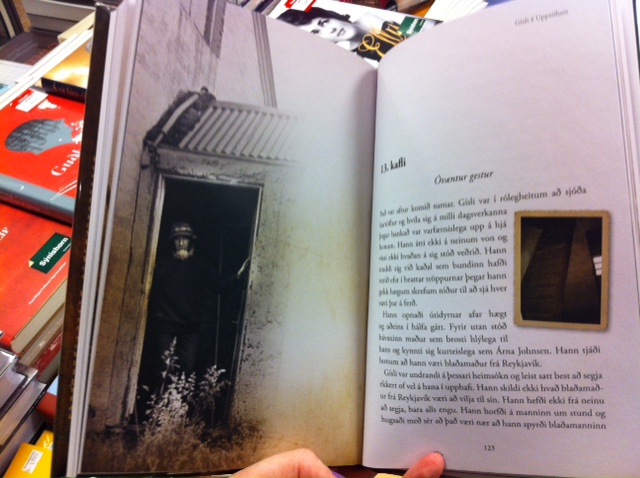
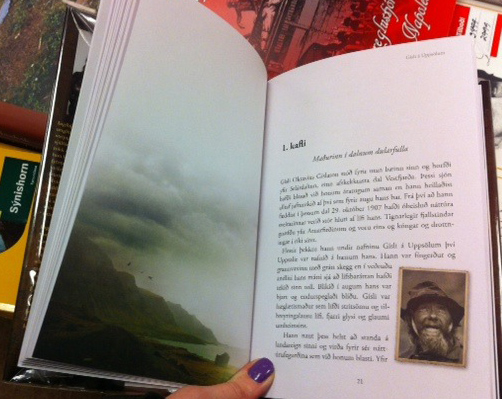
The first one I’d like to show you is called “Gísli í Uppsölum”. It’s a book about man most people over a certain age in Iceland know about. Gísli was basically a hermit thatlived on a farm in Iceland in almost complete isolation with only his animals as company and no technology. It was only in 1984 that he was introduced to the nation through a TV show called “Stiklur”. Now we have a book about his life, his family and the bullying he endured. Definitely a must-read in my opinion.

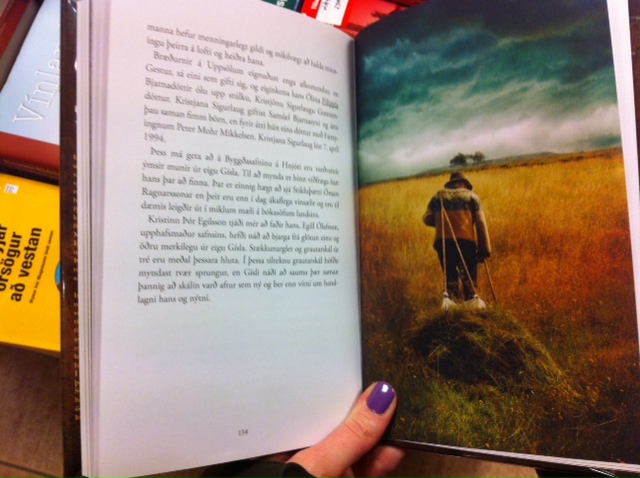
Not only is this book interesting but it also visually stunning. There are some gorgeous photographs featured in it and instead of piling them up in the middle like so many biographies do, they blend in beautifully with the text. They’re not printed on special glossy paper but instead simply printed on the same paper as the rest of the book.

First Chapter Spread

13th chapter: the unexpected guest

Gísli dragging hey

Last example from Gísli á Uppsölum

Now another book that caught my eye for it’s clever design is called “ð ævisaga” which pretty much translates to ð a biography. It’s the story of the letter ð, from its origins in the writings of Anglo-Saxon monks and how it became an inseparable part of the Icelandic alphabet. As far as letters go, I think ð is one of the more interesting ones but this book is definitely not for everyone (although I kinda want it because I’m easily swayed by pretty covers and ð is kinda interesting and why did we start using it in the first place? I actually do sort of want to know).

The biography of the ð

I’m always attracted to simplicity and the cover of ð ævisaga is just that. And I love their use of colour. From the bright green title page to the red chapter breaks and little bits of red text. It’s very visually accessible which makes sense since there are three graphic designers involved in the writing of the book (and one historian).

Ð examples

Ð in signage

Now these are the first two books I’d like to mention but I’d also like to quickly express my  delight in the republishing of some of my favourite Scandinavian children’s literature. Ronia (by Astrid Lindgren) was one of my favourite books as a child and one of the few children’s books I could read without crying in frustration (I’m looking at you Enid Blyton). And The Brothers Lionheart (also by Astrid Lindgren) is such a lovely, heartbreaking and traumatising story. A must read for all children.

They also republished one of Ole Lund Kirkegaard’s books. I’m not sure English speakers are familiar with him but he wrote some of the weirdest, wackiest books of my childhood. In one of his books a couple of kids draw a rhino on a wall and it comes alive. Another is about a boy who’s physically weak and gets bullied at school. He then meets a witch that makes him strong for a day so he gets a chance to show up his bullies only to become weak again the next day and life goes back to the way things were. I think it’s very important for kids to read books with a good message so I really do hope they continue republishing his work.

News, updates, and the Icelandic book market

I’ve been mouthing off all over the place over the last few days, as usual.

I’ve been trying to convince my sister to blog here but she’s suffering a bit of blog anxiety.

One of the subjects she wants to blog about is one she cannot believe anybody would be interested in. The conversation went roughly as follows (translating and paraphrasing from Icelandic, of course):

Jenný: I’d like to blog about the Icelandic book market. There are a few books coming out that have unusually good covers. I’d also like to write about some of the weird and quirky books that are published here on a regular basis. And there are a few really interesting reissues of historically important Icelandic books that I think I could blog about. Do you think anybody would be interested?

Me: Awesome!

She: Does that mean you think people would be interested?

Me: Would they? Of course. Book geeks love hearing about that sort of thing. Hell, I’d love to read those posts.


Jenný remained sceptical.

My sister works in the Icelandic book industry and has a front row seat for observing the Icelandic Christmas book season. I can’t think of anybody more qualified to comment on it than her.

And I’m pretty sure that updates, weirdness, and stuff about the unique Icelandic book market would make for great blog posts. So, am I right or am I wrong? What do you guys think?

High tide and a room of your own

Under the glacier

The germ of the idea behind ‘Loot, kill, obey’ comes from two sources, one literary, one from real life.

The literary germ is going to be obvious to you once I mention it: Daphne du Maurier’s Jamaica Inn. Specifically the scene with the wreckers towards the end.

Of course that led to a bunch of research that revealed how the whole scenario doesn’t really work, you’re more likely to wreck a ship by turning off a real lighthouse than by erecting a fake one. Which is then what I had the wreckers do in my story.

The second inspiration is a little bit more personal: my great-grandmother’s farm in Staðasveit.


My great-grandmother, María Ásmundsdóttir, was a remarkable woman. She was one of Iceland’s earliest photographers. When she was born, Iceland was a pre-industrial agricultural economy. When she died, it was an advanced western economy with high living standards, free healthcare and free education.

When María was born, a child had only a 50/50 chance of reaching the age of five (which is why life expectancy numbers are so misleading, but that’s a topic for another day). She survived tuberculosis, two wars, saw Iceland declare independence, and got to experience radio, photography, movies, cars, TV, computers, airplanes when they were new and shiny inventions nobody had quite figured out yet.

She also made a decision early in her life which meant that her descendants are cut out of the farm on Snæfellsnes.

Well, maybe cut out is too harsh a word. Her siblings’ descendants own the farm. Her own descendants don’t.

For good reason, as well.


My great-grandmother’s farm

The farm is a beautiful thing to behold. It isn’t a grand thing like you’d expect an old well-to-do farm in Europe to look like. Iceland doesn’t have cottages or estates. A nice two story building covered with corrugated iron is pretty much as grand old style as Iceland gets.

The current farmhouse was built when my great-grandmother an adult. The farmhouse she had grown up in was a traditional Icelandic turf house.

Yeah, like I said. Iceland was a pre-industrial farming economy until the 1940s.

I’ve never seen the original burstabær, it was in ruins by the time I managed to visit the place, but María lived there with her two daughters for the first few years of their life. My grandmother, Áslaug, on a good day, could recall stories and details about the old farmhouse, about a way of life that hadn’t changed much Iceland for almost two hundred years.


My great-grandmother was a single mother in the early twentieth century.

Now, anybody who is familiar with Icelandic culture knows that most Icelanders are proud to live in a country where a single mother can raise her kids without sinking into poverty, anything else is a failure of society. There’s no judgement or condemnation. You cope. Relatives help. Whatever flaws Iceland has (and there are plenty) intolerance towards single mothers isn’t one of them.

This wasn’t the case when my great-grandmother was raising her two daughters.

Iceland used to be a strict Lutheran society. Thinking bad thoughts was a sin. Everybody was a sinner. Strictness and intolerance was the norm. More things were banned than not. Iceland was one of the earliest alcohol prohibition nations and one of the latest to lift it. In one word: puritanical.

Of course, María didn’t help matters by having two children with two different men and never showing any interest in marrying them or regret about them not marrying her.


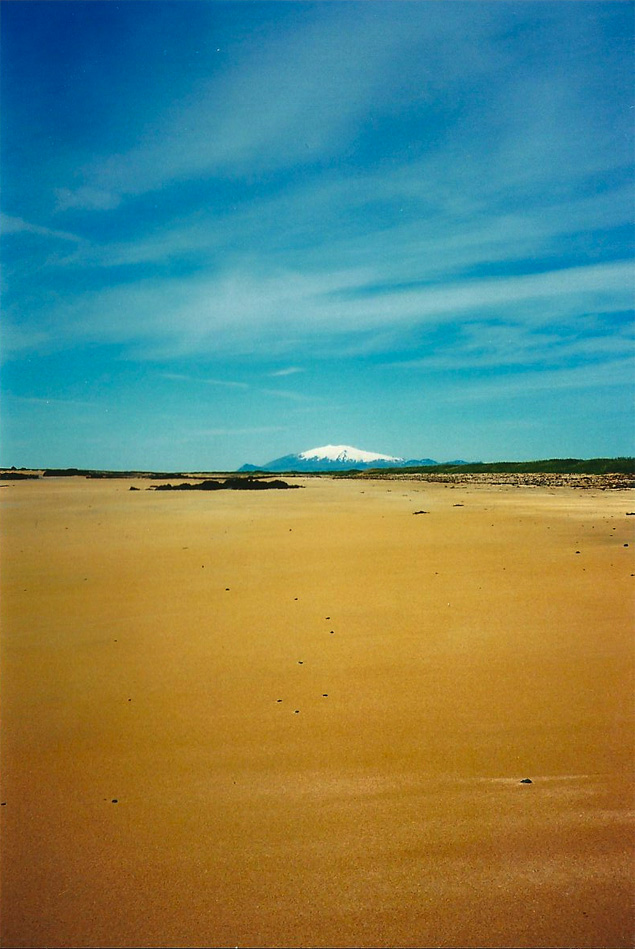
Snæfellsjökull

The farm is in an unusual location. The only way to reach it is to walk, during low tide, along the beach, with the roaring ocean on the left and sheer cliffs on the right. It’s a bit of a trek to reach the actual farmhouse from the nearest road and you have to time it so that you get to the farm before the tide comes in. Otherwise you’d be washed out into the sea.

Of course, nowadays you can also use an SUV or a proper off-road vehicle to reach the farm, but back in my great-grand-mother’s day they didn’t have that luxury.

Most Icelandic beaches are black; the sand is made out of volcanic rock ground down by the elements.

Unusually for Iceland, the beach leading to the farm is white, like one of those white sand beaches you see in the Mediterranean.

It wouldn’t look odd to a foreigner, but to me, an Icelandic college student, this was one of the few times in my life that I had actually seen a white beach and seeing one in Iceland was an alien, somewhat weird, feeling.

Seeing the famous Snæfellsjökull just ahead, hovering almost mystically over the countryside, only made the experience weirder.


Snæfellsjökull is Iceland’s most famous mountain, volcano, and glacier. Or it used to be before Eyjafjallajökull erupted. It was the opening to the underworld in Jules Verne’s A Journey to the Centre of the Earth. In Icelandic folklore it is Iceland’s point of greatest magical power, affecting all those who live around it in weird ways. Those born “undir jökli” (by the glacier) are said to be different from the rest of us.

Others say that it’s like a magnet for Iceland’s hidden people.

One group of cranks has congregated there on a regular basis because they believe it will be the landing site for a visiting species of benevolent aliens.


Dividing an estate caused friction. It always does. There’s something about inheritances that drives siblings to argue about things that ultimately don’t matter.

When her parents died, my great-grandmother was the cause of a schism in her family. She argued with her siblings about what should be done about the farm.

They wanted to continue to run and keep the farm. She didn’t.

Her logic was impeccable. If they kept the farm, she’d be doomed to live and work there, raising her daughters there, for the rest of her life. If they sold the farm, she could buy a flat in the capital—have a room of her own, so to speak.

In the end, she forced a sale, took the money, and moved to Reykjavík with her daughters, buying a tiny flat by Hringbraut in Reykjavík’s Vesturbær. Many years later, the descendants of her siblings bought the farm back, sans most of the land, which now belonged to a neighbouring farmer, and have been using it as a summer house since. They let the rest of us visit the place occasionally, if we ask really nicely.

María Ásmundsdóttir lived in that flat for most of the rest of her life, only moving into a home during the absolute last years of her life.

That small flat at one point housed six people when my grandmother moved back in with her mother with her four children after she left her husband. The flat was a life saver.

My great-grandmother spent the rest of her life sewing, painting, and photographing. She held her first gallery show of her paintings when she was eighty. Her daughters only found that she had suffered from glaucoma when she told them about the operation that fixed it, after the fact. She, a half-blind octogenarian, had managed to conceal her half-blindness, organise the operation and doctor’s appointments, and make her way to the operation all without any help from anybody.

Then she went back to painting, sewing, and taking photographs.

She was an awesome woman whose frequent criticisms of people were both brutal and especially stinging because she invariably had a solid point. There were times when she was absolutely terrifying. I miss having her around as she was one of the few people who had a tendency to be even blunter than I am.


From the last leg of the trek to the farm

The small town of Galti in “Knights and Necromancers 2: Loot, kill, obey” is inspired by my great-grandmother’s farm. The beach-side walk that is only passable during low tide, the horizon lined with mountains, the small dock and simple buildings are all drawn from my memories of that place.

And, although none of them are based on, María, my great-grandmother, the memory of her and the other awe-inspiring women in my family are the motivation for the creation of the female characters in all of my stories.

In Loot, Kill, Obey, four of the five main characters are women, as are two main ‘bad guys’. The sorcerer Cadence, a character in Knights and Necromancers 1 (and in stories five and six), was created because I wanted a character who was, frankly, as intimidating as some of these women were in real life.

You don’t see truly intimidating women that often in fiction even though they are all over the place in real life.

I hope I can change that a little bit.


You can buy “Knights and Necromancers 2: Loot, kill, obey” on Amazon.com, Amazon.co.uk, on the iBookstore, and from Kobo.

Or, possibly for a limited time, you can read it for free online.

Knights and Necromancers 2 has been released

My second ebook, Knights and Necromancers 2: Loot, kill, obey, is available now from Amazon, iBooks, and Kobo.

From the Knights and Necromancers 2 page on the Heartpunk website:

The wreckers have their shipwreck and their loot. Their next step is to get rid of the witnesses.

Grace and Cera’s only hope is to make it to safety in Galti; a small fishing village ignored and forgotten by the outside world. With them are the remaining survivors of the shipwreck: two sisters who have just seen their entire lives sink down into the ocean and the destroyed ship’s first mate.

Unfortunately for Grace, Cera, Hale, Kally, and Derek, the wreckers aren’t the only thing following them to Galti.

Knights and Necromancers 2

Knights and Necromancers 2: Loot, kill, obey

The adventures of Grace and Cera continue and feature, in no particular order:

  • A giant two-headed eagle.
  • A Necromancer.
  • Warrior Sorcerers.
  • Wreckers and mercenaries.
  • Zombies.
  • Dainty aristocratic ladies with crossbows.
  • Sociopathic talking ravens.
  • A buff martial artist who fights with flaming fists.
  • And an occasional moment of deserved and well-earned angst.

While Loot, kill obey is the second story starring Grace and Cera it is my hope that it should work as a standalone read. While there are plenty of details from the first story that add to this one, very few of them are necessary for enjoying the yarn.

It is available from Amazon.com, Amazon.co.uk, iBooks, and Kobo.

I’ve also decided to offer the entire thing up for free on the web, at least for now. It’s an experiment. I haven’t made my mind up about it or whether to leave it up as an ongoing thing, so any and all feedback is appreciated.


If you haven’t read Knights and Necromancers 1: Days of wild obedience then that’s still available for free (or for $0.99 on Amazon.com). Help yourself to a copy on Amazon.com, Amazon.co.uk, iBooks, Kobo, or direct from the Heartpunk website.

Or, you can try the free online web reader.

The first story has only had one review so far (and a pretty good one at that).

Guy Gonzalez said this here kind thing about Knights and Necromancers 1:

Days of Wild Obedience works not only as a compelling gateway into an intriguing new world, it holds its own as a standalone novella, too. That said, I’m ready to jump into the next tale in the series, and I’m already imagining the RPG and movie! Definitely recommended.


Which reminds me:

I would really, really, grateful it if those who have read Knights and Necromancers 1 wrote about what they thought of the story. It doesn’t have to be a review (although that’d be nice) and it doesn’t have to be positive (although that’d be nice as well). It’d make a huge difference if you could because working in a vacuum is worse than even getting negative feedback.

And don’t worry about hurting my feelings. There’s no way that you could come up with a more detailed critique than my mother did. (There’s a reason why me and my sister have a high tolerance for having our work criticised.)

Anyway. Download. Read. Enjoy. And then tell me what you think (if it’s not too much trouble :-))

The comment-fiction challenge post-mortem

Almost a month ago I started the Readmill comment-fiction challenge. The idea was to add a secondary layer of back-stories to Knights and Necromancers 1 as comments in Readmill.

I explained the idea in more detail in my original blog post.

I uploaded the last comment-fiction earlier today.

The good news is that the entire thing was a lot of fun to do. The bad news is that I was probably the only one who enjoyed it. 🙂

I held back the last entry for a couple of days to see if anybody noticed. Nobody did.

It’s not a total loss. Turning 22 000 words of comment-fictions into a cohesive story shouldn’t be too much work. It’s something I can post as a freebie on the Heartpunk at some point.

In completely unrelated news, I have tweaked the design of the online version of Knights and Necromancers 1 and added a couple of navigation features (keyboard navigation and swipes for going to the next and previous chapters).

Fantasy, Collapse, and a sense of history

A few incoherent random thoughts on fantasy and progress.

One of the things that fascinated me as an adolescent reading Tolkien’s Lord of the Rings was its sense of history.

The writing’s crap. It reads as if it were written by a pastoral poet who, on a particularly invigorating walk, decides that the rustic drizzle is gloomy enough to inspire him to write about war. The characters are simplistic and one-dimensional cyphers who serve mostly as structural building blocks and arbitrary plot engines. The story’s as insufferable to the adult Baldur as it was fascinating to the adolescent Baldur.

(I like the movies. The characters are more human and richer and by virtue of the medium we are blessedly free of Tolkien’s crap prose. The movies make for light-hearted blockbuster entertainment.)

But the story’s sense of history is fascinating to an adolescent: a long lost golden age, a second war repeating along similar lines to an earlier war. That’s not enough to make it rise above the tedious writing, but it’s enough to make a teenager’s mind spin.

As long as you don’t figure out that the entire thing is little more than reactionary and racist tory tripe lamenting the fall of the English upper class in world war one.

Even though most of Tolkien’s imitators don’t have his regressive political views (I know, I’m being charitable here and assume that they are aping him without thinking), they do manage to echo some of the basic themes, making them recurring tropes in the fantasy genre.

Even Moorcock plays with the idea, presenting a multiverse where chaos and law are locked in eternal combat, repeating their fight for dominance in an endless cycle of repeating history across the worlds. Of course, Moorcock is as progressive as Tolkien is regressive, but the trope is there.


The flip side of always having a non-mythological golden age somewhere in the histories of your world is the fact that you inevitably have societal collapse stitched to its hip. Grand, great, empires don’t go down silently. Even a great kingdom’s slow decline will inevitably be marked by bloodshed and chaos. History’s slate is wiped clean with blood.

Somewhere in the backstory of most fantasy worlds is a post-apocalyptic novel where magic plays the role of nukes and tech and Mad Max roams the countryside with a sword and a dog.


Fantasy’s view of history: What has happened before will happen again. Kingdoms rise and fall. You know there’ll be a promised one that’ll do bling to the blah because there was once a promised one that blinged the blah and lived happily ever after. If you live in a fantasy world, you live on a planet where prophesies come true with alarming regularity.

There’s something interesting about a genre that doesn’t buy into the myth of endless progress, that the arc of technology will continue ever upwards.


The myth of endless progress is the arch-villain of modern history, post Cold War. Scratch the surface of almost any environmental crisis or economic disaster and you’ll find the progress myth at it’s heart. Things will always get better. The real estate market always goes up. The stock market can’t fall again because we’ve finally figured things out. Global warming will be solved by technology. Peak oil will be solved by technology. Resource depletion will be solved by technology. Ocean acidification will be solved by technology. Onwards and eternally upwards. Immortality and godhood is humanity’s manifest destiny.

If you subtract the tory slant endemic to most fantasy fiction (corrupted bloodlines, aristocracy’s divine right to rule, unrepentant nostalgia, fear of change, impure races challenging the pure, etc.) you have a genre that believes things fall after they rise; that humanity can’t surpass the inherent limitations of the world around it.

Of course, ignoring the regressive politics that dominate the genre is almost impossible. Sure, you have Moorcock and his lot, who are unrepentant progressives and have a knack for fantasy, but they are the exceptions rather than the rule.

The belief that humanity can’t surpass the limitations of the world it inhabits is often saddled with the accompanying belief that humanity can’t surpass its own limitations, that qualities are innate and not learned, that you can’t change your lot through education, that all improvement is an illusion.

It doesn’t have to be like that. History is littered with examples of societies that rise to glory but then collapse because they ran out of resources or energy. In a world where we face exactly that risk, fantasy fiction has the potential to be one of the more progressive genres around, representing a playground of ideas on how progress loses momentum and arcs downwards into collapse.

Science fiction is always about progress, it’s locked in a constant dialogue on the concept, either progress triumphant or progress denied. Fantasy is a chance to play with the issues the world is facing without having to address the inevitability of eternal technological progress.

That is, provided it can rise above the execrable politics it grew out of, like a flower growing out of a turd.

Two questions on putting books on the web

I’ve put together a web version of Knights and Necromancers 1: Days of wild obedience.

You can have a look at it here. Read the entire thing online.

I decided to keep it simple, no javascript, just focus on making readable, linkable web pages.

So, I have two questions for you:

  1. What do you think about the design?
  2. What do you think about offering full versions of ebooks for free on the web while charging for the EPUB/Kindle versions?

I’m debating whether to put full versions of later entries in the series on the website (using the above-linked design) while still charging for the ebook versions of the stories on Amazon, iBookstores, and Kobo. I know of a few examples where that has worked and a few where it hasn’t, so I’m curious what people think.

Perceptions of society

Descriptions of a society is like the proverbial blind men describing an elephant; a partial insight is indistinguishable from a lie.

Iceland just had a referendum on its constitution. Over two-thirds approved and, moreover, over two-thirds voted in favour of specific reforms that they felt the new constitution had to have.

The story told about post-crash Iceland is almost like a fairy tale. A nation that threw out the banksters and cleaned up after being betrayed by its financial class. A left-wing government was voted into power. The debts of the public were written down. Financial crime was prosecuted and corrupt government officials brought to justice. A new constitution has been crowd-sourced and written by the people themselves. The government refused to kowtow to the demands of the UK, EU, and the IMF, and through unorthodox economic policies has returned to economic growth. The government has rejected austerity. They passed a media freedom/free speech law that was written with the advice of Wikileaks.

That is the story told about Iceland in foreign media.

And it’s almost entirely a lie.

Some small fry in the finance industry have been prosecuted and convicted. The big fish not only all got away but continue to own large chunks of Icelandic society. The so-called left-wing government followed the IMF playbook to the letter, receiving praise from the IMF for the work they’ve done. Most of the policies they have put into place would make Thatcher proud. Two officials were prosecuted. One got away with a slap on the wrist (no punishment). The other’s crimes were so blatant that despite the best efforts of various factions in Icelandic society, they had no option but to convict him for insider trading.

The rest all got off scot-free, despite receiving large amounts of money from the banks.

The debt write-downs were almost instantly rolled back by index-linking. Icelandic society is in the middle of the greatest mortgage crisis in its history. It’s a powder-keg waiting to explode.

The constitution wasn’t crowd-sourced but written by a committee appointed by parliament (itself largely composed of the same corrupt members of parliament who ran the place pre-crash). The committee draft, which is what the Saturday referendum was about, is non-binding. The referendum question was whether the new constitution (which will be written by MPs) should be based on the committee draft, not whether it should become our new constitution. The Independence Party, the likely winner of the election next spring and so the party that would have to implement a new constitution, is already claiming that it isn’t bound by the results of the referendum because they don’t feel like it. (Essentially, their logic is as tenuous as that.)

The Icelandic government has already paid most of the Icesave debts, despite what the media may tell you. The dispute between the UK, Iceland, and other EU countries is entirely about how much interest is owed, not about the validity of the debt itself. The supposedly left-wing government tried time after time to accept the UK/EU demands but were overruled as the President forced a referendum on the laws. Which is a Presidential power that is very likely to be dropped from the new constitution.

Yes, there’s a good chance that the gloriously democratic crowd-sourced constitution will be used to roll back the reach of democracy in Iceland.

By any calculation, the Icelandic government has engaged in unprecedented cutbacks in social services, healthcare, education, and support for the elderly.

The growth of Iceland’s economy is probably down to capital, trapped in the country because of the currency controls, overheating the real estate market.

The Icelandic Modern Media Initiative that was passed by the Icelandic parliament was a non-binding resolution, which is a handy way of disposing of things you never intend to implement. The actual media laws that were passed require the registration of every single media outlet, TV, print, radio, or website, that intends to deliver news and commentary to the Icelandic public. Failure to register will result in a fine. The same media law includes new provisions for blocking the IP-addresses of illegal content.

Most of the news you hear about Iceland is a partial truth that, like the blind man describing an elephant as a snake, becomes a lie.

The truth is that Iceland is a corrupt oligarchy that, unless it changes its course radically, is on the verge of collapse.

Why is this important to fantasy and science-fiction writing?

Because every story is composed of partial truths, a weave of limited perspectives that build a picture. Even an omniscient narrator can only describe one thing at a time.

A single society can be represented in so many different ways, can be shown to be so many different things. Who you choose to describe and follow, whose position and perspective is central in the story, is as important to world-building as the actual details of the world themselves.

The details of education and wealth won’t come into it if the lead character comes from a class without access to schools and money.

Interior decoration trends and detailed architecture is a sign of a high culture and a sophisticated society if your lead is a member of the elite but becomes an emblem of corruption and sleaze if your lead is an unprivileged labourer.

And, finally, a country can seem to be an utopia to outsiders who only stay for a few weeks when they visit, but feel like a confining dystopia to those who can’t escape it.

What I’ve been up to

I’ve been quite busy over the last couple of weeks. Some of it may interest you.

I wrote up a long post over on baldurbjarnason.com called ‘Is it safe?’ on some of the issues currently facing web and ebook development, especially focusing on the spiralling complexity.

Then I told the world about some of the things I’ve learned while setting up Studio Tendra, namely that all ebook publishing platforms are a joke

This was followed by a trip to the Frankfurt Bookfair and a talk at Tools of Change Frankfurt. The talk was on design and readability in ebooks. Presenting the talk with me was the fantastic Dan Rhatigan of Monotype Imaging, whose knowledge of type and typography is awe-inspiring.

One of the announcements at Frankfurt was that of Bookshout’s Importer where they ask you for your Amazon account details and password and try and import all of your Amazon books into Bookshout’s reader. I explained why this is an incredibly bad idea. Read my responses in the comments as well. Asking the reader for these details is never acceptable.

Finally, this week I posted a Design Features Grid from my Frankfurt talk with some explanatory notes. You can see the grid here and read the notes here.

This one’s older but still relevant. The first children’s book that my sister (Brynhildur Jenný Bjarnadóttir, the other half of Studio Tendra) illustrated has been adapted into an interactive children’s book app. Intended for young children. My sister is a little bit embarrassed by this early work, and I’m not the target audience so can’t judge, but it seems to be getting good reviews. Go have a look at Perky Pranksters.

The comment-fiction challenge is continuing apace as well. I’m up to chapter 32 and have a few more to upload later today.

::looks up at the post::

Sheesh. That’s more than a little bit, isn’t it?

What have you been up to? Feel free to tell me in the comments.