If the Kindle fails so will ebooks

I don’t get why anti-Amazon people get up in arms whenever they find an author who links to the Amazon pages for their books. Or whenever a publisher out there seems to favour the Seattle Behemoth over the ‘honourable’ opposition.

I get why people don’t like Amazon. They are a big, competitive, ruthless, anti-union tax avoider that treats low level staff (like, say, warehouse employees) like slave labour. There’s a lot not to like.

What I don’t understand is what do people expect us to do?

Even if every publisher, every author, and every editor out there studiously avoided sending traffic to Amazon in any way, that wouldn’t even cause a measurable dent in Amazon’s book or ebook revenue.

People go to Amazon, they aren’t sent there.

Pointing people anywhere else will only result in lower affiliate fees for the author or publisher as people follow the link, close the tab, and then go to Amazon directly to buy it there anyway.

The only thing the publishing industry can do to harm Amazon is not to sell their titles there, and even then, unless they are colluding illegally to withdraw their products from Amazon all at the same time, that action is more likely to harm the publisher than Amazon.

Hoping for Amazon to collapse or fail is equally self-destructive. There are few things more dangerous to a publisher than having a big retailer or distributor go bust on them. It locks up inventory and money for a long time and usually result in the market shrinking in the short term.

Moreover, I’m pretty sure the fate of ebooks is intertwined with the fate of the Kindle.


The only ways Amazon can be beaten by a ebook competitor is if a competitor:

  • Focuses on a genre and on being the best store for that genre. Take the niche not the market.
  • Consistently outperforms Amazon and slowly takes market share over, say, a decade. This will take years and the ebook market will probably be disrupted by something else by the time they’re done, anyway.
  • Be the first. This is Kobo’s tactic and it isn’t wrong. Amazon hasn’t rolled out in all territories yet so there is potential for being there first in a lot of countries and be the incumbent once Amazon arrives. The only downside is that Amazon is in all of the lucrative territories already.
  • Collude and manipulate the market illegally. That’s what publishers have basically been doing so far, managing to push Amazon down a bit but they haven’t made much of a headway lately.
  • Finally, you can hope that Amazon makes some sort of misstep that leads to a collapse or deterioration in performance leaving space for others to step in.

This last possibility, at first glance, seems like it would be the ideal scenario for Amazon’s competitors.

The problem is that ebooks are the Kindle and Amazon as far as most buyers are concerned. Most of those buyers have non-book alternatives competing for their entertainment dollars as well. If Amazon had a major misstep, that would be more likely to result in the ebook market contracting than in somebody else taking over.


Here’s a thought exercise. Let’s imagine that we could magically retcon the ebook market so that it was now evenly split between all five major aspirants (Amazon, Kobo, B&N, Apple, Google).

You might haggle about who the runners up should be but most would go with those five.

What do you think would happen tomorrow? What would happen the day after the retcon when our magical reality-bending powers faded and the personalities and capabilities of those employed at each retailer took over again?

Over the next couple of years Amazon would retake its marketshare until it owned at least 60% of the ebook market again. Why? Because it would build on its ecommerce expertise in general (they don’t just do ebooks), because it has better customer service than the others, and because it would have lower prices. Amazon will always have lower prices because it is willing to aggressively give up revenue to do so and its executives passionately believe that it’s the right tactic for them. Other companies don’t have the guts to match it completely.

No two ways about it. Amazon has earned its marketshare.

That doesn’t mean that, taken as a whole, Amazon isn’t manipulative and utterly ruthless. They are. And they have a frightening amount of resources. That’s why they’d retake the market in record time.

So, how do you beat Amazon? You don’t. You can’t beat a tiger at being a tiger. If you are afraid of a tiger, the only sensible strategy is to avoid it.

Stop selling books through Amazon. Raise your prices and sell direct, making sure to provide a world class service. But you’d have to make damn sure that your books are interesting because otherwise none of your readers will bother.

Followup to ‘this ebook is a lemon’

There have been a few responses to my ‘This ebook is a lemon’ post earlier. Most of them either omit or misunderstand details from the post, which means that I probably wasn’t clear enough in the original. So here is a followup with a few clarifications based on issues raised.

It’s not an analogy

I was not comparing ebooks to cars. I was, like Akerlof in his paper, using cars to explain the ‘market of lemons’ dynamic. The other examples Akerlof used in his paper were from insurance and employment but the used car example was both simpler to explain and had the added benefit of being real-world evidence of the model.

Why didn’t I use ebooks to explain the theory? Because, as I stated in the post, I’m not 100% certain ebooks fit the model. It’s better to explain a model using examples that fit perfectly and then let people apply that understanding to the problem area at hand.

Well, except for the fact than none of the commenters or responders seem to have done that.

No, not all cars or ebooks suck, that’s not the point

Another common misunderstanding was that I was claiming that all ebooks were crap or that all cars from a certain era were crap. Absolutely not. The entire post and Akerlof’s model hinge on information asymmetry. The buyer can’t tell beforehand whether any given product is a lemon or not while the dealer can. Amazon, for example, has access to abandonment rates and return rates, as well as the ability to data-mine notes on a book for negative keywords. A publisher knows quite well how much effort they have put into a book. Dunning-Kruger aside, most publishers who are dumping crap on the market know it’s crap.

This information asymmetry is what gives rise to the bad publisher’s incentive, the customers demand for a lower price, and the good publisher’s disincentive. The bad publishers don’t take over the market until late in the process and I stated quite clearly in the post that I think we’re at the start of the process, not the end.

So, the point isn’t that all cars or books are bad. The point is that the buyers know that there are lemons in the market (might even have bought one or two in the past) but can’t tell if any of their current options are lemons or not. The existence of lemons combined with information asymmetry is what creates the dynamic.

“The returns policy you suggest is insane”

Possibly. There are only two ways to break the market of lemons dynamic:

  1. Information symmetry. The customer gets access to all of the information needed to help tell lemons from the rest.
  2. Returns and warranties. Which is an artificial way of shifting risk back onto the provider.

So, you need either a massive returns policy or information symmetry. I don’t think you’d need both.

And as to whether publishers could survive that sort of returns policy for ebooks. Of course they can, they live with that same policy for print.

You don’t have to work in publishing for long to see at least one sales forecast completely destroyed by a series of booksellers returning a book months later. Publishers are already geared for this kind of uncertainty.

“This will only impact self-publishers and push readers to big publishers”

Possibly. But what worries me is big publishing seems to be relaxing their quality standards (or they never had them, as in the case of ebook production). More and more they are acquiring new titles from self-publishing or fan-fiction, which would be fine if they were going for the good titles (of which there are plenty in both circles) but they are manifestly going for the crap most of the time.

But, yes, this could result in a two tier market where big publishers get away with charging $10 and everybody else can’t give it away.

“You didn’t mention X free bla”

I stated a general principle of the effects of free. If somebody disagrees with a common sense statement, bringing in examples won’t sway them, they will just come up with excuses for disregarding those examples.

“Piracy solves the problem”

One of the most interesting observations on piracy was Tim O’Reilly’s statement that ‘piracy is progressive taxation’. That is, it disproportionately impacts the more successful.

A corollary to that is that the promotional and marketing benefits of piracy disproportionately go to the more successful. Try to pirate anything beyond the recent and mainstream and you will run into difficulties. Most people know how to pirate a current TV series. They don’t have a clue of how to find anything less popular.

Moreover, piracy is a function of interest. You won’t pirate something you aren’t interested in. So, any product that has generated enough interest to benefit from the distribution effects of piracy has also generated enough interest to break out of the ‘market of lemons’ dynamic.

"DRM-free solves the problem

It’s a start since it does take away some of the long term risk for the buyer (‘will I lose this book in the future due to DRM?’) but it doesn’t address the basic information asymmetry.

“Prime members read for free”

Only for Prime members in the United States and the Lending Library only has a fraction of the books on the market.

The Lending Library may well be part of the solution as it lets people read as much of the ebooks as they want, but it comes with it’s own issues. Namely, most publishers can only get into it by giving Amazon exclusivity, which would make the Lending Library a massively iatrogenic solution. The cure would be worse than the sickness.

“The bad publishers will drop out”

Given that bad publishers have more incentives to publish than the good and that bad publishing requires next to no investment, this problem will not be solved by bad publishers dropping out of the market as their ‘get rich quick’ schemes fail. The incentives will make sure that several new bad publishers will be lining up to replace every one that drops out.

“You can easily tell whether a car is a lemon or not”

The idea here being that the car simply either works or not—it’s quality apparent just with a test drive.

A lemon is not a car that doesn’t work or handles badly. A lemon is a car or product that fails later on, after purchase. A car with a history of specific kinds of repairs and failures is more likely to fail than others (and is a lemon). This is the reason why used car dealers in many countries are required to disclose a car’s repair history. Those laws are in effect because of Akerlof’s paper. They weren’t on the books when he first wrote it.

Akerlof’s theory is not about ‘used’ versus new products

The used car market was just an example. Whether the cars were new or used doesn’t matter for the theory. The dynamic is orthogonal to the newness or how used the products are. That’s why his other example was a non-rival product like insurance.

“One man’s lemon is another’s lemonade”

Sure, that’s why I said that the following was one of the basic premises of the post:

Quality in this piece being defined as whatever the reader values, no matter how rubbish it looks to an over-educated twit like me. I’m not making any assumptions about writing, genre, or style.

That means that when I’m talking about quality I’m talking about it from the perspective of the buyer, e.g. a romance reader looking for romance ebooks. A lemon in this context is what that reader considers to be an unacceptably bad romance book, not a scifi or crime novel.

And I also stated that if you disagree with any of the premises then you really don’t have to read the rest as you’ll almost certainly disagree with it. I meant it. If you already disagree with the premise why bother responding to the post? I’ve already given you an out.

This ebook is a lemon

It’s no secret that I’m a huge fan of both Akerlof and Romer, not just the paper they co-wrote on looting in the financial system but also their work individually. Turns out one of Akerlof’s most famous papers is directly relevant to the ebook market.

For starters, a few basic premises. If you disagree with any one of these you can feel free to ignore the entire argument. I can easily pick apart any one of these statements myself, so I’d understand it very well if you disagreed with them. However, if you find them somewhat likely then the overall picture of the ebook market is a bit dark.

  • Ebook buyers buy more than they read. Book abandonment is high and out of proportion with the return rate.
  • Sampling the first few chapters is a lousy predictor of how much the reader will enjoy the book. You can only assess basic stylistic issues from a sample, not storytelling quality. Ergo the reader has to buy the ebook to assess the quality of the story.
  • Reviews are an extremely unreliable indicator of quality. The average quality of most reviews themselves is very low. Many reviewers are paid shills or just extremely overworked.
  • Luck is one of the biggest determinants of bestseller status.
  • Striking, marketable, differentiation is difficult in ebooks without having the reader actually read the book.
  • The marketing differentiation that is possible without having the reader actually read the ebook (sex, scandal, celebrity) is at best orthogonal to the book’s actual quality and at worst inversely correlated to quality.
  • Quality in this piece being defined as whatever the reader values, no matter how rubbish it looks to an over-educated twit like me. I’m not making any assumptions about writing, genre, or style.
  • The majority of ereader vendors implement style and design overrides to preserve a baseline of readability and usability, not to commodify their product’s complements. (I.e. they are well-meaning, rational actors.)
  • Distribution is becoming mostly self-serve with a very porous filter. (Like, for example, the self-publishing services run by Amazon, Kobo, B&N, and Apple.) Almost anybody with a computer has access to the publishing industry’s full ebook distribution chain.
  • Ebook development is underpaid and so will not attract experienced talent from the web industry.
  • It’s easier to make a bad book than a good one and so the vast majority of ebook supply will be bad.

The argument I’m about to make is that this situation gives publishers (both self- and non-self) an incentive to market poor quality books (remember the definition of quality I outlined above), that the average available quality of books will fall, and that the overall publishing market will shrink in terms of overall revenue (even though the the number of units sold increases).

First, the basics…

A market of lemons

It has been seen that the good cars may be driven out of the market by the lemons. But in a more continuous case with different grades of goods, even worse pathologies can exist. For it is quite possible to have the bad driving out the not-so-bad driving out the medium driving out the not-so-good driving out the good in such a sequence of events that no market exists at all. (Akerlof, 1970)

In 1970 Akerlof published a paper describing exactly why a new car loses a lot of its value as soon as you drive it newly bought out of the showroom.

With new cars you can assume that most cars of the same make will be of a similar quality and that if something goes wrong you are probably covered by a warranty.

Anybody who is in the market for a car doesn’t have access to the information that would let them tell the difference between a good car and a bad car (otherwise known as a ‘lemon’, hence the title of the paper).

If a new car is a lemon, i.e. has some sort of manufacturing flaw, neither the buyer or the seller are aware of the flaw and the manufacturer usually covers the repairs if the flaw is discovered within the warranty period.

However, because used cars have a history, the seller of a used car is likely to know which are lemons and which aren’t. This asymmetry of information in the used car market is, according to Akerlof, the primary reason why there is a pricing disparity between a new car and even the most recent of a used car.

Both bad and good used cars are likely to sell for the same price because the buyer can’t tell the difference between those that are lemons and those that are not. And because the buyer knows this there will be s strict upper limit to what they will pay for a used car—the seller of a good used car will not get its full value.

The sellers of good cars have an incentive not to sell while the less well-meaning sellers of lemons have an incentive to sell. The information asymmetry means that less scrupulous will, at least while the market is still maturing, get more than their ‘lemon’ car is worth.

The Lemons model can be used to make some comments on the costs of dishonesty. Consider a market in which goods are sold honestly or dishonestly; quality may be represented, or it may be misrepresented. The purchaser’s problem, of course, is to identify quality. The presence of people in the market who are willing to offer inferior goods tends to drive the market out of existence- as in the case of our automobile “lemons.” It is this possibility that represents the major costs of dishonesty – for dishonest dealings tend to drive honest dealings out of the market. There may be potential buyers of good quality products and there may be potential sellers of such products in the appropriate price range; however, the presence of people who wish to pawn bad wares as good wares tends to drive out the legitimate business. The cost of dishonesty, therefore, lies not only in the amount by which the purchaser is cheated; the cost also must include the loss incurred from driving legitimate business out of existence. (Akerlof, 1970)

What worries me…

Reliable information about ebook quality is increasingly hard to find in the market. Reviews have almost completely been gamed; a casual reader has few reliable indicators that tell them whether a review is an honest one or not. Rubbish books, ones that most buyers don’t even read to the end before giving up, shoot up the bestseller lists due to viral marketing. Bestseller lists themselves are increasingly either gamed by publishers or by ebook retailers themselves who are trying to shift their sales in one direction or another.

Even some big publishers are getting into the game by dumping cheap OCR converted ebooks full of errors onto the market. Again, a casual reader has no way to know whether this particular big publisher is one that does a quality ebook version or one who pumps out ebook ‘lemons’ by the virtual truckload.

The same applies to self-publishing. The casual reader doesn’t have access to the information to help them tell the difference between the self-publisher who has invested substantially in the quality of their book and one who is dumping something onto the market looking for a quick profit that requires next to no cash outlay. That is without mentioning the publishers and authors who have been paying for reviews, engaging in sock-puppetry, and astroturfing left, right, and centre.

My worry is that the ebook market has all of the hallmarks of an early stage ‘market of lemons’. The information asymmetry—exacerbated by the information hoarding done by the big ebook retail players—the growth in dishonest actors, and the increasing disincentive for honest actors to even participate at all, make ebooks an ideal candidate for the lemon dynamic.

What this would mean, if true, is that publishers and self-publishers will begin to experience massive pressure to lower prices if they are to move their product at all.

I think this is already happening with self-publishers.

Alternatively, revenue might become a function of your reputation and your maximum addressable market. That is, once you’ve surpassed whatever necessary lower reputation bound that is required by your addressable market, the price becomes elastic within the bounds set by the market (e.g. there are only so many steampunk fans in the universe).

Below that reputation bound you will have problems even giving away your product.

If the former model is correct (i.e. the ‘we’re all screwed’ model) then the ebook market can only be saved by the ebook retailers. They’d have to begin to practice complete information transparency and put in place aggressive returns policies (yes, even more aggressive than the one Amazon currently practices). Sales information, return rate, who exactly is that reviewer and where did they come from—anything and everything about the book would have to be shared in a digestible manner. A culture of secrecy at this stage would risk killing the market off entirely.

If the latter model is correct (i.e. you can only charge when you’ve built up a reputation) then we enter a world where the publishing industry needs to learn how to engage directly with readers to build their audience. This means that they would have to give a lot more stuff away for free.


A note on free

Free creates the most value when it is specifically being used to build a community and decrease information asymmetry—transferring the burden of risk from the reader to the publisher. Short term free offers are of little use. You need to go long term and do it with work that is representative of what you do.

Free at the moment is used by exactly the crowd that churns out the most rubbish (Smashwords) and Amazon makes offering titles for free needlessly difficult.

A free offering is always preferable to a cheap offering for the seller because it suspends the buyer’s value judgement temporarily but in exchange buyers can assess the quality of the good at their own leisure. A mixture of free and higher or variable priced goods is likelier to result in a fairer exchange of value between the reader and author than an oversupply of cheap (the free offerings build reputation).


What to do?

If Akerlof’s theory is right and is applicable to the ebook market then it predicts that prices in the market will be driven down below what can sustain the good actors and investment in research and development will cease.

I.e. the books will all be rubbish, look like shit, and the big tech companies will cease to invest in their ebook platforms.

This isn’t a problem that can be solved through code or UI design. It requires a fundamental change in business tactics. You can’t solve structural business problems with code.

The biggest measure retailers could take to ease this asymmetry is an extended, no questions asked, refund policy. If a reader asks for a refund they should get it even if they bought it ages ago. A year should be enough. A market that is developing ‘lemon’ dynamics requires a generous refund policy.

(This is in addition to the radical information transparency I mentioned above.)

This would obviously shift most of the economic power back to the reader but it would also have several consequences. Low quality books would be hammered in the market. Publishers would no longer have incentive to market bad books. Prices would rise to account for the returns and the portion of readers who dishonestly return ebooks but readers would likely accept the rise because of the generous refund policy. The market would contract sharply at first as the bad actors get shaken out but would begin to grow aggressively as the good actors, who are rewarded with both a higher price and a lower return rate, reinvest their profits in product development.

That’s the theory, anyway.

I hope we are in for a world where reputation becomes the key to survival, where publishers and authors with a good reputation in a market segment can make a decent profit, because the alternative is horrifying. I don’t think it is likely that ebook retailers will take the measures necessary to correct the dynamic once it becomes more apparent that the ebook market is a market of lemons.


ETA:

One thing worth mentioning:

If you assume that the above applies to the iOS app store as well then that would mean that the best pricing strategy for a new app is freemium. That is, the app itself should be free to use/play with variably priced add-ons and features you can buy once you know you like the app.


ETA 2:

I’ve posted a followup to this post addressing some of people’s criticisms and misconceptions.


References:

Caught between madmen and mercenaries

This is not a comment on the recent court ruling on Apple, agency contracts, and price fixing.

But a cursory glance at the history of ebook retail makes one conclusion crystal clear:

Ebook retail is a horrible horrible business to be in.

On one side you have self-destructive madmen like the big publishers who have done the following lovely things to their ebook retail partners:

  • Abruptly changing all ebook distribution contracts to agency. Which would be fine if delays on their part hadn’t meant that smaller ebook retailers in many cases spent months without any inventory from the big publishers.
  • Complete refusal to even consider tactics that would level the playing field for the retailer, such as going DRM-free or adopting a wholesaling strategy that would let ebook retailers implement in-app purchases on iOS devices.
  • Near nonexistent quality control of ebook formatting, shipping titles with errors ranging from extensive spelling errors not in any other format, to garish formatting errors, even to the point of text being missing from the ebook edition.
  • Next to zero participation in developing ebook format and ebook-related standards, mostly letting tech-oriented companies run rampant with no consideration to production or distribution costs.

This is without even considering the things publishers could be doing to specifically help ebook sales such as creating ebook-optimised covers.

On the other side you have the cutthroat mercenaries. Amazon seems willing to run its entire Kindle business at break-even, which would be fine if it didn’t also make massive development investments in hardware and software. Investments that it seems content with never recouping. Apple seems willing to butcher lucrative product categories because of its inability to let any buck pass by an iOS device without demanding a thirty cent cut.

Anybody planning to start a new ebook retail store would be stabbed in the back by publishers or cut to ribbons by ruthless competitors before the first year is out.

Your suppliers have no concern for the viability of your business and are quite willing to ruin it for little to no personal gain. Your competitors have corporate parents who are willing to run the ebook retail unit either at a loss or break-even (and that’s without taking their substantial R&D investments into account, most of which are focused on developing or protecting vertically integrated silos, not innovations that actually benefit the customer).

In short, it’s a sector that desperately needs new, competent, and innovative entrants but is too irrational to sustain any sane business development or investment.

Major update to Studio Tendra’s Oz project

The Oz Reading Club has been updated with books seven and eight. And since I forgot to blog about books five and six, that means we’ve de facto got a massive four book update on our hands.

And we’ve reached a major milestone.

Yup. We’re more than halfway through L. Frank Baum’s Oz series.

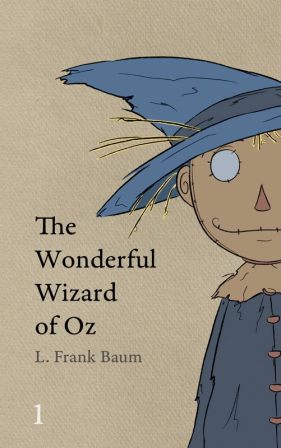
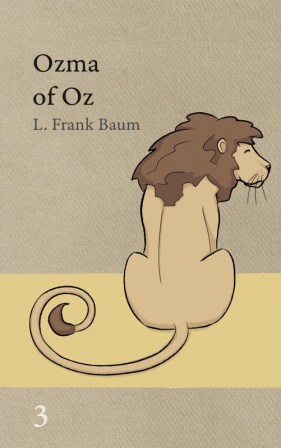
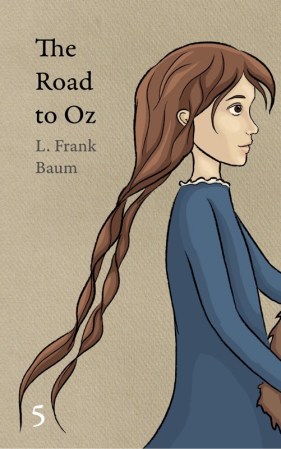
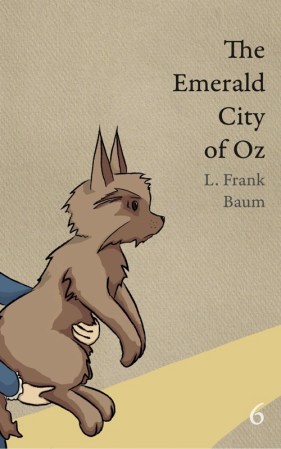
What do you think about the covers Jenný has illustrated so far?

The Scarecrow

1. The Wonderful Wizard of Oz

The Scarecrow and Tin Woodsman

2. The Marvelous Land of Oz

Cowardly Lion

3. Ozma of Oz

Hungry Tiger

4. Dorothy and the Wizard of Oz

Dorothy

5. The Road to Oz

Toto the dog

6. The Emerald City of Oz

The Shaggy Man

7. The Patchwork Girl of Oz

Polychrome

8. Tik-Tok of Oz

What are self-publishing’s biggest pain points?

I’ve found that the more time you spend in a problem area the more you realise how many of your preconceptions were mistaken.

So, instead of just assuming I know what the pain points of self-publishing are based on my own experience, I figure the best thing to do is to simply ask people.

In general, publishers face two separate problem areas:

  1. Making the book as good as possible. This means making the text as good as possible (writing and editing) and making the product as good as possible (typesetting and design).
  2. Finding a paying readership for the book. (Selling, marketing, PR, events, etc..)

I’m pretty sure most problems self-publishers face fall into those same areas but I also suspect that their specifics and details are going to be unique to self-publishing.

And by self-publishing I basically mean any publisher with only one or two employees and who publishes only ebooks.

So, what are self-publishing’s biggest pain points? I’d really appreciate any answers, either in the comments below, twitter or, if you want, in email. (My email is baldur.bjarnason@gmail.com for those who prefer not to contribute in public.)

Continue reading

Intellectual terrain

Books today are for sharing, not reading

Literature is the art of writing something that will be read twice; journalism what will be read once. Cyril Connolly, Enemies of Promise

I’ve been reading Cyril Connelly’s Enemies of Promise. It is wonderful, brilliant, and meandering; analytical where complexity requires it to analyse; spiritual where the soul needs to be fed; and optimistic just when your spirit is about to break.

It also manages to make you think about what you’re doing and where you’re coming from.

Which is humbling.

Despite the wide ground it covers — style, autobiography, grammar — it maintains a steady focus on the subject of promise, what it means to be a promising writer and how it either pans out or doesn’t.

It’s meandering in the same way that a hiker meanders. Like Connelly, the hiker has a destination and they aren’t diverging from their path, but the terrain they are covering simply doesn’t lend itself to direct routes. You can’t run a marathon or sprint without a road or a track. Uneven terrain requires a wandering path.

Modern writing, the chatter that fills websites, newspapers, and short ebooks, doesn’t account for terrain. They are mental sprints — short bursts along a paved road where everything uneven and unnatural has been removed, cut away, or flattened. The longer books might qualify as marathons, but they still only track along the ready-made roads of pre-fabricated ideology and and cookie-cutter abstract arguments.

Continue reading

Good books don’t win

The editorial fallacy is the belief that all of a publisher’s strategic problems can be solved by pursuing and publishing the finest books and articles. (From The Editorial Fallacy)

This is a belief that seems to be pervasive among large sections of the publishing industry. It’s also a very mistaken belief. The problem isn’t just with the idea that the only thing a publisher needs to do to succeed is publish good books (which is patently untrue) but also with the basic premise.

Namely, what is a good book?

Continue reading

Peasants

I have moved from Iceland to the UK three times in my life. The third, which not so coincidentally took place in 2008, is likely to be the last.

(The two attributed quotes in this post are thanks to Íris Erlingsdóttir’s awesome blog post where she collected them all in Icelandic.)

The first time I moved back to Iceland was in 1984 when my parents returned after finishing their studies abroad. Of course, knowing our luck, we returned at the start of what ended up being one of Iceland’s longest general strikes, lasting from the 4th of October to the 30th.

Iceland was in an economic crisis, what we call ‘kreppa’. What most foreigners don’t realise is that Iceland has been in a bipolar boom-bust cycle ever since we declared independence from the Danish. And before that we were in a poverty spiral of misery, hunger, and sky-high childhood mortality rates.

Continue reading